Our Vision
A world where all early education leaders have the knowledge and strategies they need to provide children and their colleagues with strong, supportive learning environments.
Our Values

Aspiration
We strive to transform early education, acting with high expectations, an open mind, and a deep belief in all children’s potential—and the potential of the adults dedicated to their learning.

Equity
We focus on settings that serve the most vulnerable, aiming to buffer stress and reduce adversity.

Scientific Integrity
We hold ourselves to high scientific standards. We craft relevant questions, employ rigorous methodologies, and produce findings that advance policy and practice. Our tools for the field are grounded in evidence.

Connectivity
We are always striving to make connections. Our research informs our work with leaders; insights from the field enhance our research; and the networks we build enable collective action.

Communication
We generate, broker, and exchange information for impact. We are dedicated to rapid-cycle dissemination that provides accessible, progressive, and practical tools and information.
Directors
Stephanie Jones
Faculty Director
Nonie Lesaux
Faculty Director
Stephanie Jones is the Gerald S. Lesser Professor of Early Childhood Development at the Harvard Graduate School of Education, where in addition to serving as Faculty Director of the Center on the Developing Child, she is Director of the EASEL Lab and co-Director of the Saul Zaentz Early Education Initiative. Jones is a developmental psychologist trained in child development, prevention science, and social policy. Her work is transactional and translational, using rigorous studies of learning settings, family systems, and the practices and policies that shape child wellbeing from infancy through early adolescence to build knowledge of human development in context, and then applied research to transform the settings in which children learn and play.
Jones’ specific developmental and experimental research investigates the causes and consequences of social and emotional problems and competencies; strategies for altering the pathways that shape children’s social and emotional development; and programs, interventions, and pedagogy that foster social and emotional competencies among children, adults, and environments. Broadly, her work is designed to connect foundational information about social, emotional, and behavioral development to effective strategies and practices for use in learning settings around the globe. By conducting rigorous, longitudinal studies of such strategies and practices she engages in an evidence-action cycle that is intended to grow knowledge about social, emotional and behavior development in context.
Jones serves on numerous national advisory boards and expert consultant groups related to social-emotional development, early childhood education, and child and family anti-poverty policies, including as a member of the Council of Distinguished Scientists for the Aspen National Commission on Social, Emotional, and Academic Development. She consults to program developers and practitioners and has conducted numerous evaluations of programs and early education efforts, including Reading, Writing, Respect and Resolution, Resolving Conflict Creatively, SECURe, SEL Kernels, and the Head Start CARES initiative. Her research is published in academic and educational journals as well as in trade publications, and she regularly presents her work to national and international academic, policy, and practitioner audiences.
Jones is a recipient of the Grawemeyer Award in Education for her work with Edward Zigler and Walter Gilliam on A Vision for Universal Preschool Education (Cambridge University Press, 2006) as well as the Joseph E. Zins Early-Career Distinguished Contribution Award for Action Research in Social and Emotional Learning. Jones holds a BA from Barnard College and a PhD from Yale University where she trained with Edward Zigler.
Nonie Lesaux, Roy E. Larsen Professor of Education and Human Development, is the dean of the Harvard Graduate School of Education (HGSE). Lesaux assumed the role of dean in March 2025 after acting as interim dean since July 1, 2024. She served as academic dean at HGSE from 2017 to 2021. She was previously named the Juliana W. and William Foss Thompson Professor of Education and Society before her appointment to the Larsen chair in 2021. Her research focuses on promoting the language and literacy skills of children from diverse linguistic, cultural, and economic backgrounds. Results of her program of research appear in numerous scholarly publications, and their practical applications are featured in three books. She served on the U.S. Department of Education’s Reading First Advisory Committee, and the Institute of Medicine and National Research Council’s Committee on the Science of Children Birth to Age 8.
A member of the HGSE faculty since 2003, Lesaux’s research focuses on strategies and innovations to improve learning opportunities and literacy outcomes for children and youth. Her teaching focuses on literacy development and reform, early learning, and leading system-level change. Lesaux works largely through partnerships with school districts, states, and communities. In school districts, Lesaux investigates language, reading, and social-emotional development; classroom quality and academic growth; and strategies to accelerate language and reading comprehension. In states and communities, she brings tools and concepts from improvement science to strengthen literacy plans and policy initiatives, grade-level reading campaigns, and birth-to-eight early learning initiatives. Her research-practice partnerships with large urban school districts, to improve literacy rates, include seven years with San Diego Unified and ten years with the New York City Department of Education.
With Stephanie Jones, Lesaux leads the Saul Zaentz Early Education Initiative at HGSE, which addresses the pervasive global challenge of simultaneously scaling and improving the quality of early education. Anchored by a first-of-its-kind large-scale study to inform a new era of science and policymaking in early education, and a new model of capacity-building for leaders, the Initiative’s network and partnerships represent all 50 U.S. states and 92 countries.
Lesaux’s research appears in numerous scholarly publications, and its practical applications are featured in several books for school leaders and educators. She is co-editor of the Handbook of Reading Research (2022) and wrote a widely circulated state literacy report, Turning the Page: Refocusing Massachusetts for Reading Success, that inspired a third-grade reading proficiency bill passed in Massachusetts.
Lesaux has earned the William T. Grant Scholars Award and the Presidential Early Career Award for Scientists and Engineers, the highest honor given by the U.S. government to young professionals beginning their independent research careers. She served on the U.S. Department of Education’s Reading First Advisory Committee and the Institute of Medicine and National Research Council’s Committee on the Science of Children Birth to Age 8. From 2015 to 2022, Lesaux chaired the Massachusetts Board of Early Education and Care, which oversees the state agency that licenses and supports childcare and community-based public programs for young children. Lesaux is a member of the National Academy of Education and the board of the Spencer Foundation. She is expert consultant to the U.S. Department of Justice, Civil Rights Division, Educational Opportunities Section.
Our Team

Emily Wiklund Hayhurst
Assistant Director, Learning Design and Communications
Emily Wiklund Hayhurst is the Assistant Director of Learning Design and Communications at the Zaentz Early Education Initiative, where she develops professional learning programs, multimedia resources, and action-oriented tools for early education leaders, practitioners, and policymakers. Emily is a graduate of the Harvard Graduate School of Education, where she earned a master’s degree in human development and psychology while participating in the Zaentz Fellows Program. Before coming to Harvard, she served as an early childhood educator in Washington, D.C.

Charlotte Petty
Research Associate, Pre-K Initiatives and Data Use
Charlotte works within the Initiative's research team to support the Early Learning Study at Harvard and leads a community-partnered research project that focuses on the early education workforce in the City of Cambridge; also facilitates professional programming within the initiative, including leading the Zaentz Innovation Challenge. After working for nearly a decade as an early educator and teacher-leader primarily with toddlers in Montessori settings, Charlotte earned her Ed.M. in Human Development and Education with a concentration in Early Childhood from HGSE in 2022, during which time she was a Zaentz Fellow.
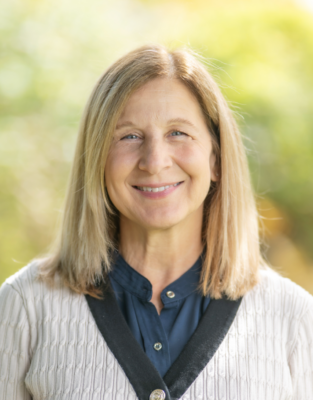
Robin Kane
Assistant Director, Professional Programs and Partnerships
Robin draws on her early childhood expertise to develop learning objectives and content for the Professional Learning Academy. A former early childhood educator and program director, Robin founded a child development center, where she taught young children and mentored educators for over 23 years. Robin designs and implements innovative professional development program and materials for early educators and leaders, including teams engaging in the Certificate in Early Education Leadership.

Kimberly McMahon
Online Learning and Program Administrative Coordinator
Kim manages and coordinates the Certificate in Early Education Leadership and Zaentz Fellow programs and provides overall administrative support for the Initiative. Kim is a Graduate of the Harvard Graduate School of Education, where she earned a master’s degree in human development and psychology and graduate of Lesley University, where she earned a master’s degree in elementary education. Before coming to Harvard, Kim was an elementary educator in Boston and Chicago and a life coach in the Boston area.
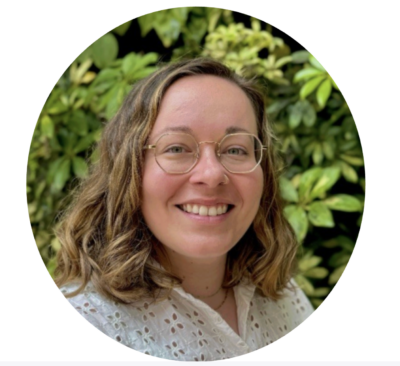
Lily Fritz
Postdoctoral Fellow
Lily is a Postdoctoral Fellow at the Zaentz Early Education Initiative working on the Early Learning Study at Harvard (ELS@H) where she is conducting longitudinal analyses of children's social, emotional, and behavioral health in light of their early educational experiences. Lily received her Ph.D. in Education with a concentration in Human Development, Learning and Teaching from Harvard in 2025. Her dissertation work addressed the influence of children's early environments on social and emotional development, with an emphasis on understanding early education and care settings as contexts for children's emotion socialization.

Armida Lizarraga
Director, Quality Measurement Initiative
Armida works as the Director of the Quality Measurement Initiative, leading the development of easy-to-implement tools to measure setting-level quality for early education and care systems. Her primary field of expertise is early childhood and language and literacy. Before joining the Zaentz Initiative team, Armida was the Executive Director of a philanthropic organization in Peru, focused on preschool teacher coaching, which she helped launch, develop, and scale-up.

Alan Mozaffari
Visiting Fellow
Alan is a graduate of Harvard's Graduate School of Education and School of Public Health, where he received his Master's in Education in Human Development and Psychology and Master of Public Heath in Health and Social Behavior, respectively. Before his graduate studies, Alan was involved in community-based, system science research with youth across St. Louis, Boston, Afghanistan, and Pakistan. Alan is currently a PhD Student in Health Policy, Population Health Sciences, UC Berkeley.

Jackie Ramos-Draper
Research and Policy Analyst
Jackie conducts complex and advanced quantitative programming, analysis, and visualization on large-scale and longitudinal data, and communicates results to both public and academic audiences, in addition to supporting the development of the Zaentz Navigator. Jackie has a master's degree in Education Policy from Harvard Graduate School of Education, where she was a Zaentz Early Education Fellow.

Kate Kane
Lead Facilitator, Certificate in Early Education Leadership
Kate is an early education consultant and Lead Facilitator of the Zaentz Early Education Initiative's Certificate in Early Education Leadership (CEEL) program. She holds a Master's degree in Early Childhood Education. At Zaentz, Kate supports facilitators and participants of the CEEL program as they engage with content to increase competencies and skills in early education leadership.

Early Learning Study at Harvard (ELS@H)
PhD and Postdoctoral Students
Caitlin Dermody, Ron Grady, and Madelyn Gardner
Zaentz Professors
Meredith Rowe
Professor
Junlei Li is the Saul Zaentz senior lecturer in early childhood education at the Harvard Graduate School of Education. His research and practice focuses on understanding and supporting the work of helpers–those who serve children and families on the frontlines of education and social services. Li studied and learned from a wide range of developmental settings with low resources but high-quality practices, including orphanages, childcare, classrooms, and community youth programs. He developed the “Simple Interactions” approach to help identify what ordinary people do extraordinarily well with children in everyday moments and made that the basis for promoting positive system change. Li frequently delivers keynote presentations and workshops for national, state, and international conferences focused on improving practices, programs, and policies for children, families, and professionals, with a particular emphasis on early childhood development. He teaches about improving human interactions and supporting adult helpers at HGSE and the Zaentz Professional Learning Academy. Li’s work is significantly influenced and inspired by the pioneering work of Fred Rogers (creator of Mister Rogers’ Neighborhood). He previously served as the Co-Director and Rita M. McGinley Professor for Early Learning and Children’s Media at the Fred Rogers Center at Saint Vincent College.
Meredith Rowe is the Saul Zaentz Professor of Early Learning and Development at the Harvard Graduate School of Education (HGSE). She leads a research program on understanding the role of parent and family factors in children’s early language and literacy development. She is particularly interested in uncovering how variations in children’s early communicative environments contribute to language development and in applying this knowledge to develop interventions for low-income families. Rowe received her doctoral degree in Human Development and Psychology from HGSE in 2003 and pursued postdoctoral fellowships in the Psychology and Sociology departments at the University of Chicago for several years. In 2009, she was appointed Assistant Professor in the Department of Human Development and Quantitative Methodology at the University of Maryland, where she was promoted to Associate Professor in 2014 before joining the faculty at Harvard. Her work is published widely in top journals in education and psychology, including Science, Child Development, Developmental Science, and Developmental Psychology.